Rebuilt from scratch every period
GLs, Excel exports, lease files, and operating documents arrive in different formats. Your team translates them manually, and that work disappears when the person who did it leaves.
Your operators use different systems, send files on different schedules, and speak different charts of accounts. Every period you translate it by hand, and the results still require hours of audit before investor materials go out.
Credence normalizes partner exports, maps every COA, and traces every investor-facing number back to its source, so your team closes faster and answers LP questions with confidence.
Teams that need normalized rollups, JV reporting, source traceability, and investor packages across partner-operated assets - without forcing every operator onto one system.
The consolidation problem
Operators will not standardize on your ERP. That battle takes years and creates partner friction that is not worth the tradeoff. The answer is a governed layer that sits between what partners send and what investors see - normalizing the inputs without forcing anyone to change their system.
GLs, Excel exports, lease files, and operating documents arrive in different formats. Your team translates them manually, and that work disappears when the person who did it leaves.
Forcing every JV or operator onto one ERP takes years, creates relationship friction, and still leaves investor templates and COA logic outside the system.
Ingest partner files as they are, normalize them to your reporting model, and preserve the full evidence chain behind every investor-facing number.
Most teams that come to Credence are spending 5 or more days on consolidation every period. Within 30 days, that number drops dramatically. From there, the mapping work compounds instead of starting over.
Walk us through your reporting cycleReporting pipeline
Each step runs from the same normalized layer so nothing falls through the cracks between what a partner sent and what an LP sees.
Load partner GLs, Excel exports, report packets, leases, and support files. No reformatting required.
Map charts of accounts and operating fields to your reporting model once. Reuse every period.
Structured lease terms, obligations, and document-backed fields tied to source, not copied out.
Catch missing files, unusual changes, and exceptions before reports leave your desk.
Aggregate entity, JV, fund, and portfolio views from one normalized layer, not a manual VLOOKUP.
Produce investor materials with a traceable path back to every source file.
What you get
Upload Yardi, MRI, QuickBooks, Excel, and custom partner reporting packets without asking partners to change how they export. Their system stays intact; your consolidation layer does the work.
Version history included: source ownership and approval state travel with each load, so nothing is quietly overwritten.
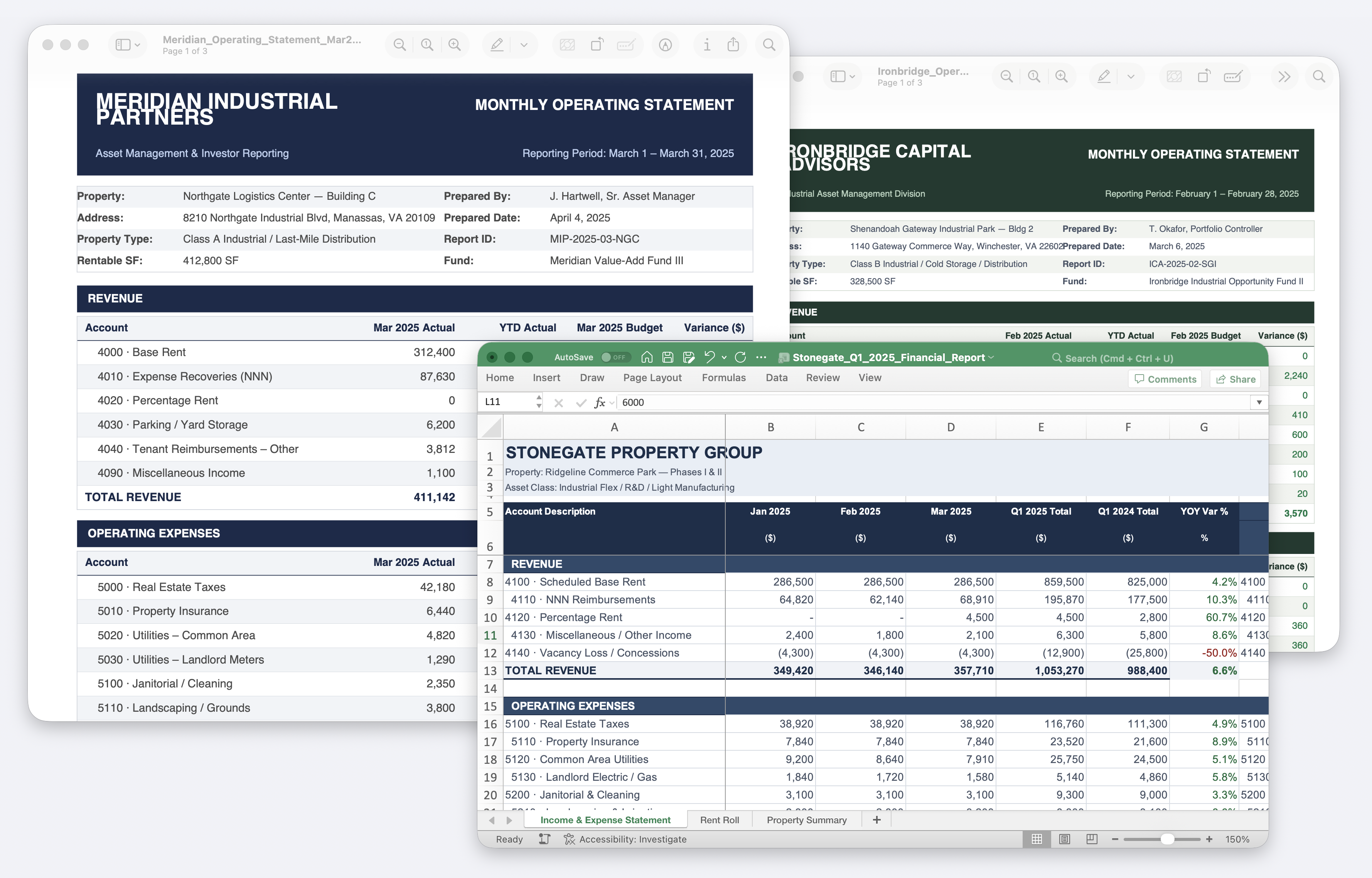

Build a governed mapping layer across every partner COA. When a new operator comes on, add their accounts to the same layer, not another new spreadsheet.
Partners keep their systems, you keep yours: your reporting model stays stable even as the portfolio changes.
Surface unusual changes, missing support, and period drift with validation rules that run automatically before you've already sent the first draft of the LP report.
Explain every movement: drill from a rollup line to the source export, mapping rule, and supporting document in seconds.

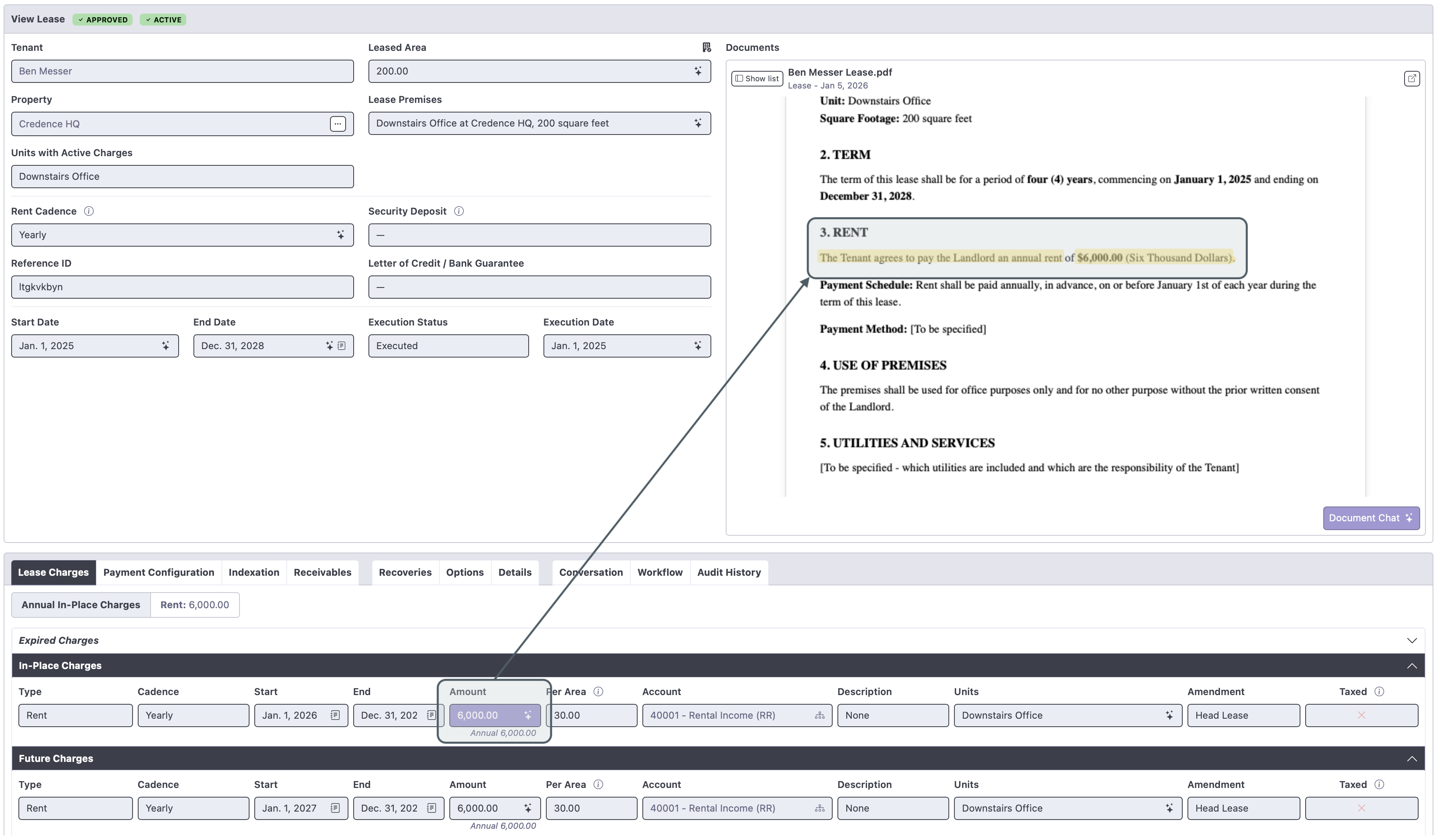
Parse leases, amendments, and operating documents into structured reporting fields with citations back to the original document so you never lose the thread between the number and the clause that created it.
Source-linked by default: every extracted field keeps a citation, not just a value.
Ask questions across partner files, normalized accounts, obligations, and source documents in plain language without a folder search or an email to the operator.
Faster LP responses: every answer points back to the record, rule, or source file behind it.

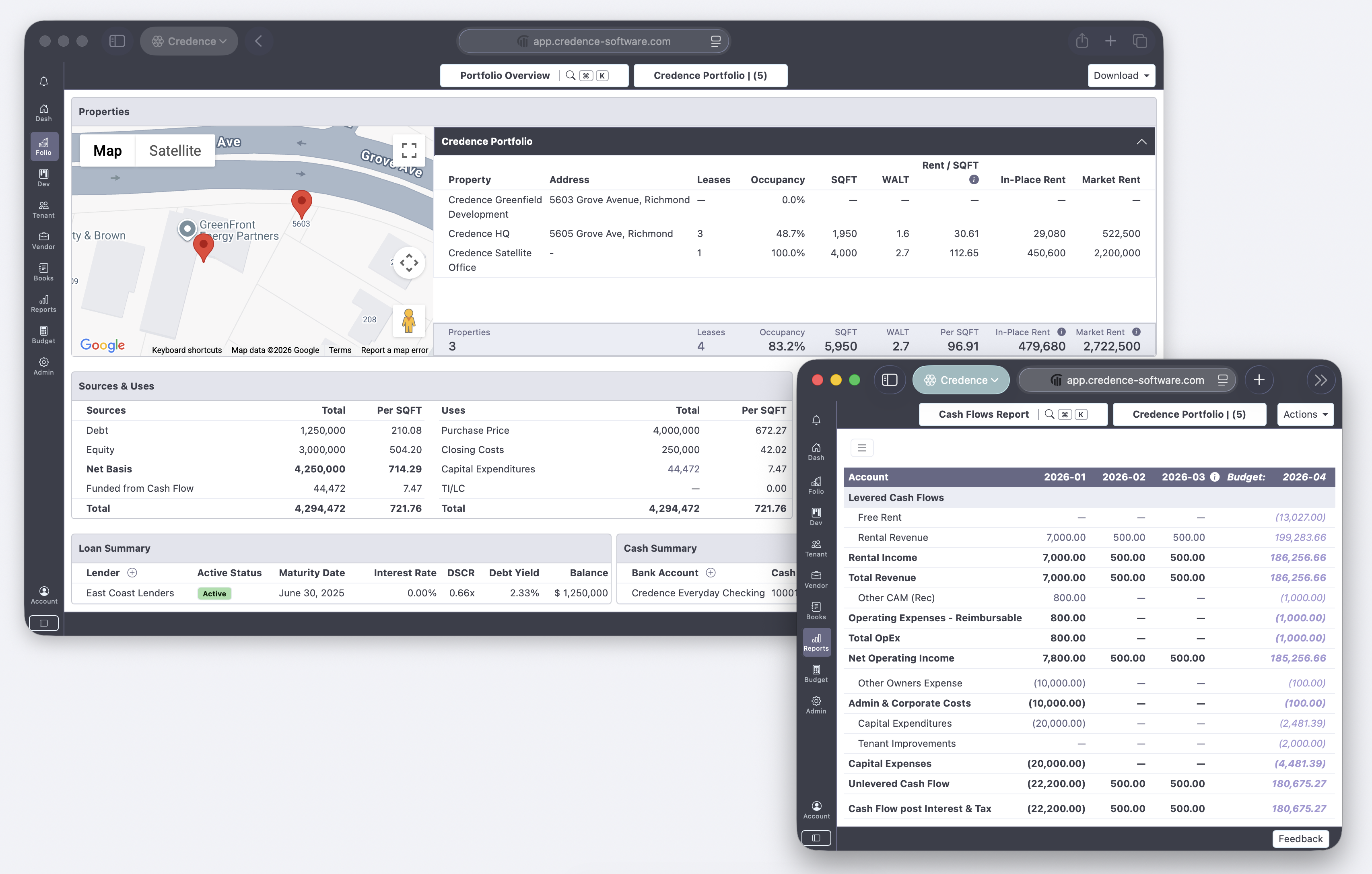
Produce entity, JV, fund, and portfolio reporting from the same normalized layer with your templates or Credence formats. Every line has a traceable path to the partner data and document support behind it.
Report with confidence: no last-minute audit sprint before materials go out.
Ready to get started?
We tailor the walkthrough to your partner systems, chart of accounts, JV structure, investor templates, and traceability requirements. See how Credence normalizes your portfolio in 30 days.
No setup fees · 30-day onboarding · Dedicated support